 The Calm Malinois
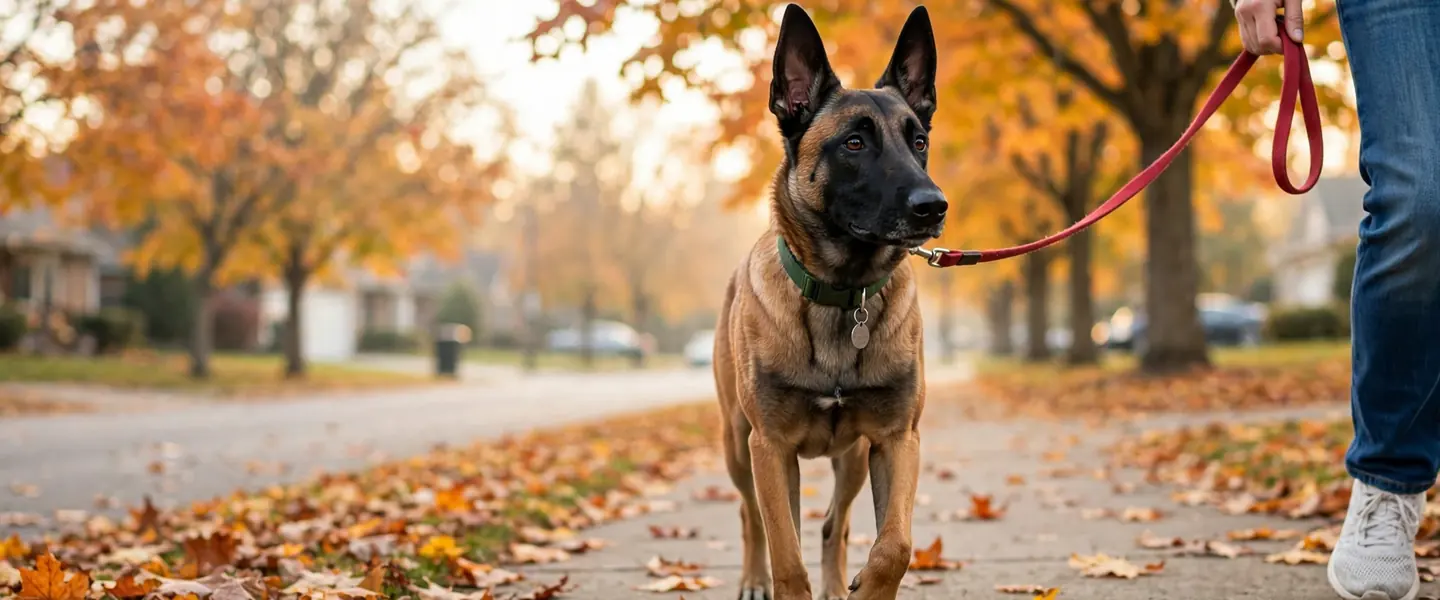
Your Malinois pulls because pulling works. It gets him to the next smell, the next dog, the next squirrel. Loose-leash walking simply flips the deal: a loose leash moves you forward, and a tight leash makes the walk stop.
It takes patience for the first week or two, but it's very learnable, even for a high-drive working dog.
The right gear
- A 6 ft leash. Skip retractable leashes. They reward constant pulling.
- A well-fitted front-clip harness with a Y-shaped front, so it doesn't restrict the shoulders.
- A 15 to 30 ft long line for sniff walks. Clip it to the harness, never the collar.
- A treat pouch, so rewards are fast.
We don't recommend prong, choke or shock collars. Pain during walks can teach a dog to link other dogs, people or cars with discomfort, and that can create or worsen reactivity.
Step 1: Reward the sweet spot
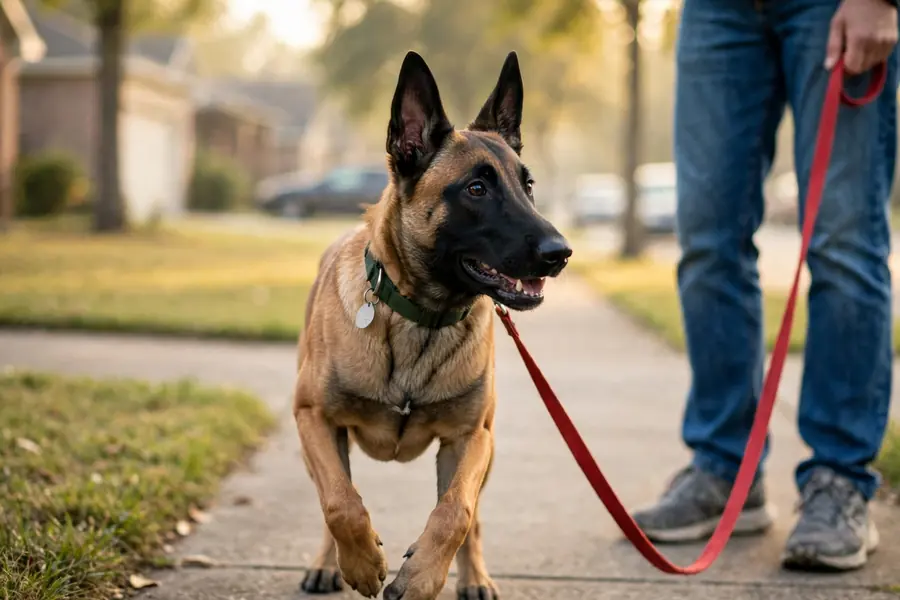 Next to your leg = treat.
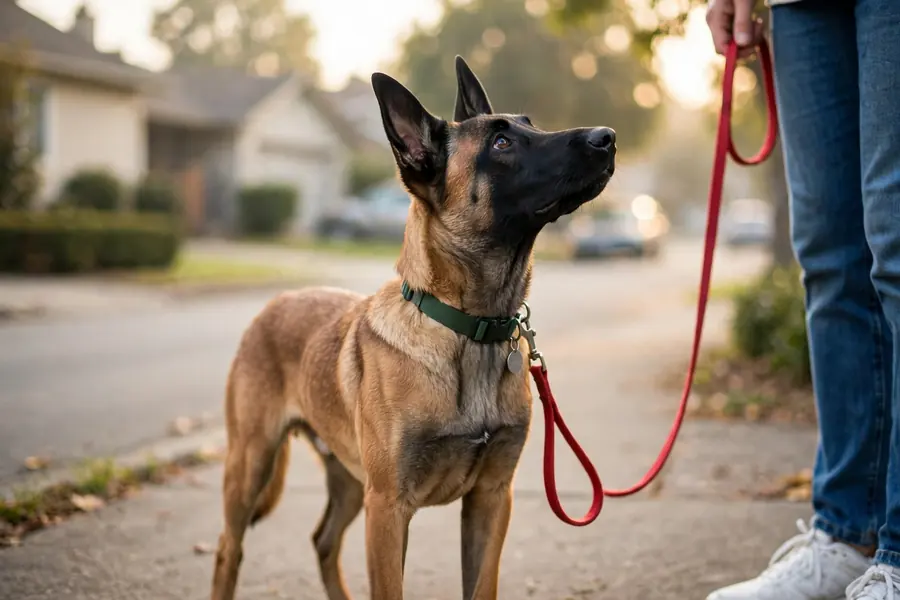 Checking in = treat.
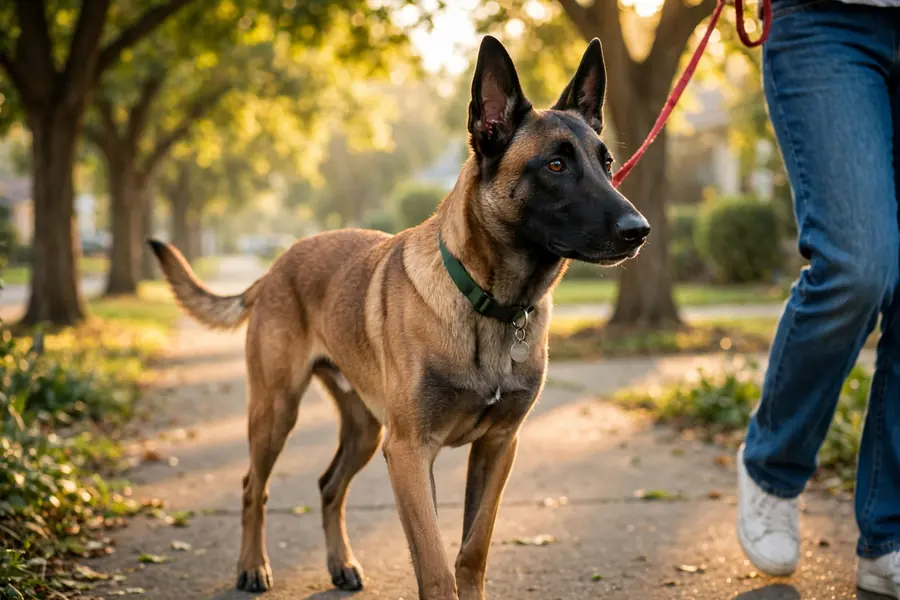 Slowly space out the treats.
Pick a side, left or right. Every time your dog is next to your leg, say "Yes!" and give a treat right at your pant seam. At first, reward every one or two steps. Yes, that's a lot of treats, so use part of your dog's breakfast. As your dog stays close more often, slowly space out the rewards.
Step 2: Red light, green light
- When the leash goes tight, stop. Plant your feet and wait.
- The moment the leash goes slack, even for a second, say "Yes!" and walk forward.
- Repeat. Your dog learns that pulling stops the walk and slack makes it go.
Plan short practice walks where you don't need to get anywhere. The first few days can feel slow. That's normal.
Step 3: "Let's go" turns
Say "Let's go" in a cheerful voice and turn the other way. When your dog catches up to your side, mark and reward. Change direction often and unpredictably, and your dog learns to keep an eye on you instead of the horizon.
Calm walks, one week at a time
From Maligator to Best Friend walks you through loose-leash walking, recall and "Look at That" with a daily training card, photos and a session timer.
See the guideInstant access on any phone or computer. 30-day money-back guarantee.
Step 4: Make it harder slowly
Practice in your house first, then the yard or driveway, then a quiet street, then busier places. If your dog starts pulling hard again, you moved up too fast. Go back a level for a few days.
Tip: a Malinois who has been inside all day will pull hardest in the first few minutes. Do two minutes of sweet-spot practice in the driveway before you head out.
Two kinds of walks
- Training walks: 5 to 10 minutes of focused loose-leash practice.
- Sniff walks: longer walks on a long line where your dog can explore and decompress. Sniffing is real mental work and very calming.
Mixing both keeps training fresh and meets your dog's needs.
Barking or lunging at other dogs
Many Malinois react to other dogs on leash, out of frustration or worry. Start here:
- Create distance. Cross the street or step behind a parked car. Stay far enough away that your dog can still eat treats.
- Play "Look at That." When your dog calmly looks at the other dog, say "Yes!" and give a treat. Seeing another dog starts to predict good things.
- Leave before it's too much. Turn and walk away with a cheerful "Let's go."
Chasing cars, bikes and joggers
That's prey drive. Keep your dog on leash near traffic, increase distance, and practice "Leave it" and "Look at That" with moving things from far away. Never let your dog rehearse the chase.
If your dog's reactions are intense, getting worse, or you can't physically hold them, get help from a certified behavior consultant before it escalates.
Free: the Maligator Survival Kit
A 3-day biting reset, a printable daily schedule for puppies and adults, and a family cue card for the fridge. It opens right away.
You will also get a few training tips by email. Unsubscribe anytime. Privacy